


By Meg Scarbrough
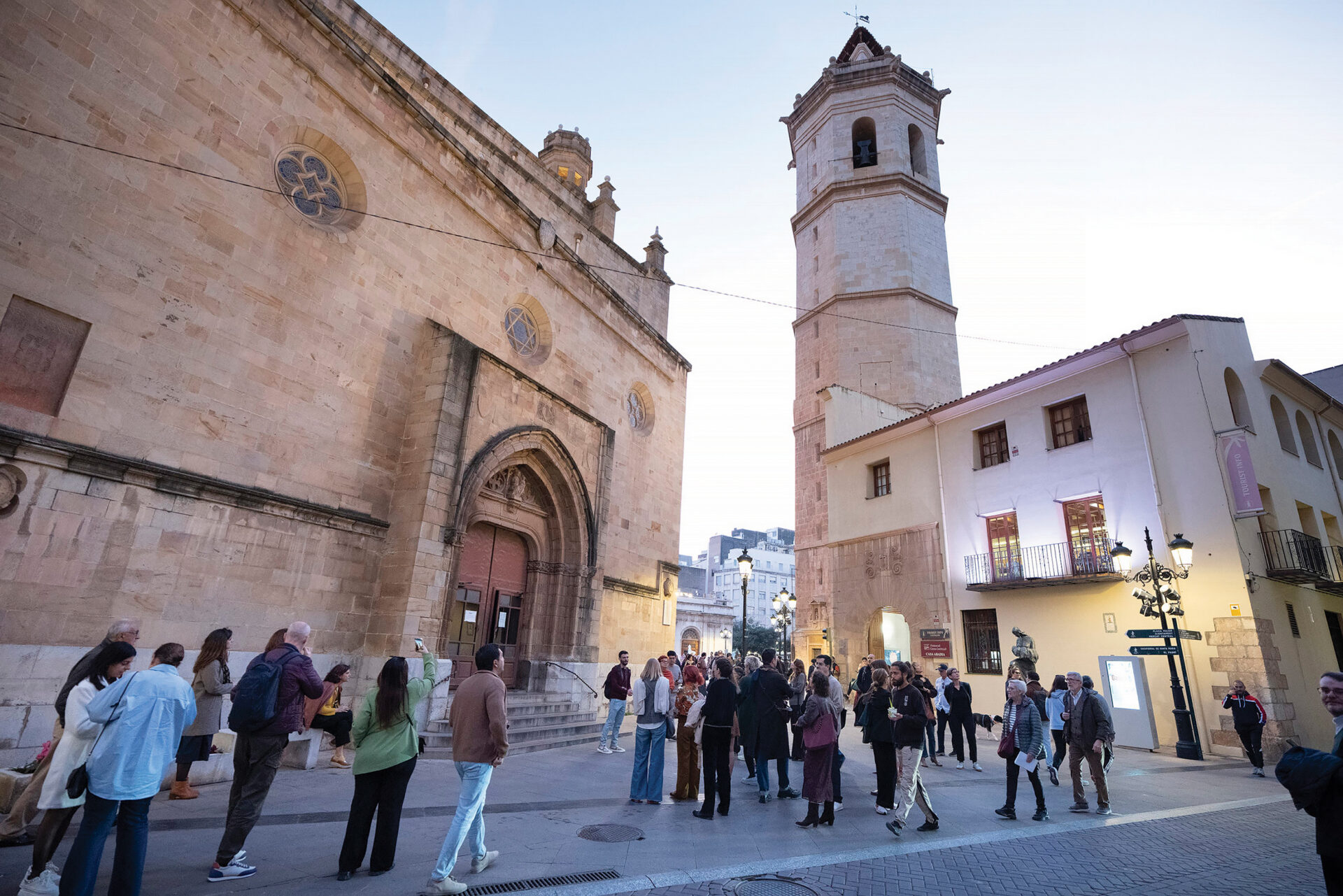
On Spain’s eastern Mediterranean coast, the province of Castellón forms the heart of one of the world’s most concentrated ceramic tile manufacturing regions. Factories, design studios and research centers stretch across the landscape, supporting an industry that exports Spanish ceramic tile to nearly every corner of the globe. Roughly 90% of Spain’s ceramic tile production originates in this region, where generations of producers, designers and engineers have helped shape one of the country’s most internationally focused manufacturing sectors.
Now the industry that grew up in this region is rethinking how it presents itself to the global market. Facing a changing international trade show calendar and shifting conditions in global construction markets, Spain’s ceramic tile manufacturers are experimenting with new ways to connect with architects, designers, distributors and media. One example of that shift took place in late February, when the industry launched Time of Spain, an initiative designed to bring international audiences directly into the heart of Spanish tile production.
The program gathered 50 journalists from 15 countries for a coordinated series of factory visits, market briefings, design presentations and product introductions across Castellón. Organized by ASCER, the Spanish Ceramic Tile Manufacturers’ Association, with support from two government-run business development organizations, the initiative marked the first time the Spanish ceramic tile sector has collectively hosted an international promotional program of this scale within Spain.
Rather than centering activity around a traditional exhibition hall, the program distributed events across factories, design centers and historic ceramic facilities throughout the region. The goal was to provide visitors with a deeper understanding of the industry’s design culture, manufacturing expertise and export-driven business model.
This initiative reflects more than a press positioning program. It signals a broader effort by the Spanish ceramic tile industry to rethink how it engages global markets.
DESIGN TRENDS
While the Time of Spain program focused in part on the structure and performance of the industry, it also offered a window into the design directions shaping ceramic tile development for the coming year.
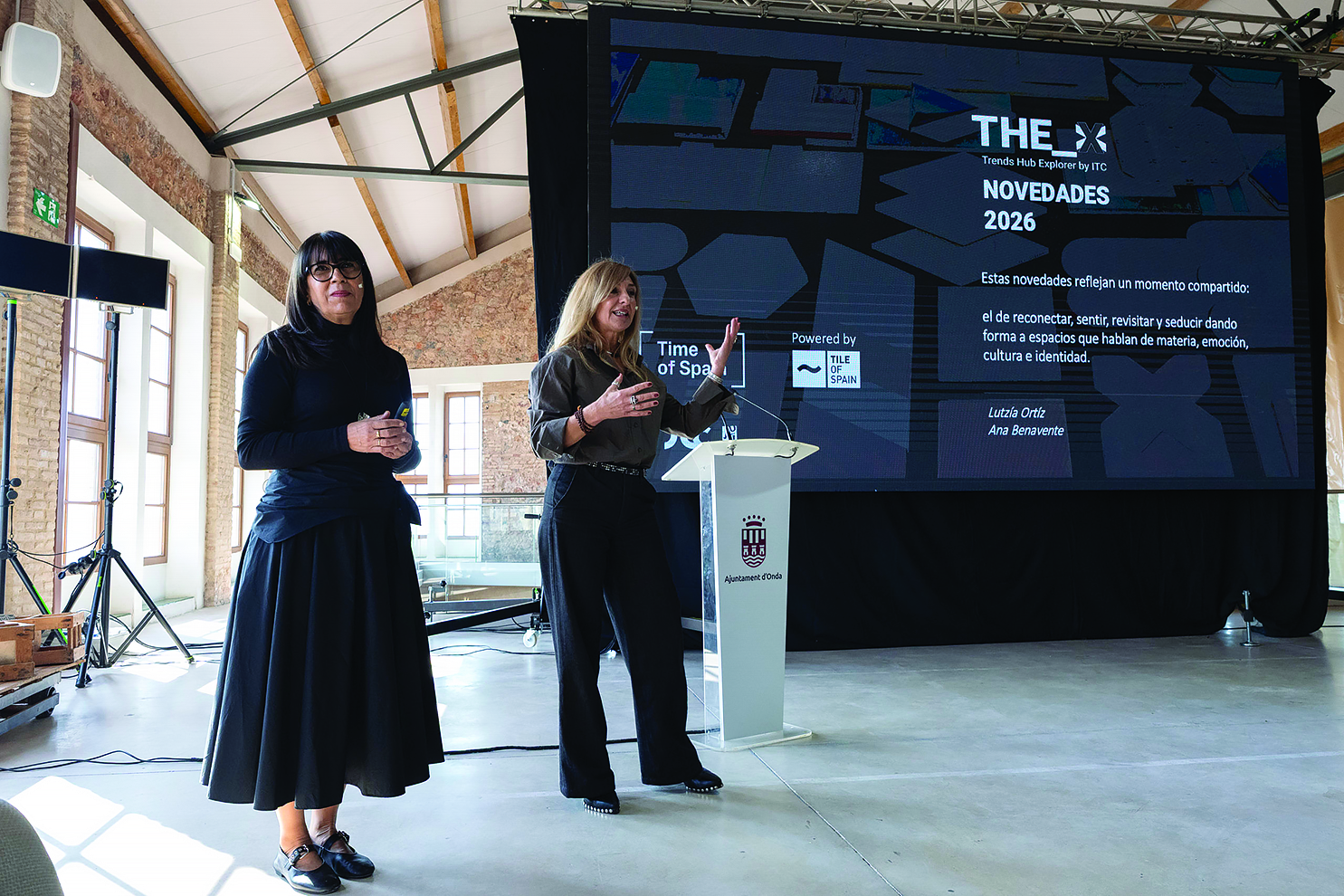
During a presentation held at La Campanata, the oldest ceramic factory in Onda, researchers and designers Ana Benavente and Lutzia Ortiz presented their latest analysis of emerging ceramic tile trends developed in collaboration with the Institute of Ceramic Technology (ITC).
According to Benavente and Ortiz, many of the latest collections reflect a broader design movement centered on reconnecting with materials, emotion and cultural identity. Their analysis identified four primary directions shaping ceramic tile development in 2026: Geomatter, Innerland, Heritage Play and Opulis.
The first direction, Geomatter, draws inspiration from geological processes and natural materials. Benavente and Ortiz described the concept as surfaces that evoke the visual traces left by minerals, erosion and sediment over time. Across several showrooms in Castellón, this translated into tiles featuring layered stone visuals, mineral textures and matte finishes designed to highlight the material authenticity of ceramic surfaces.
A second direction, Innerland, focuses on emotional comfort and sensory design. Rather than strict minimalism, the approach emphasizes softer forms, muted palettes and surfaces intended to create calm, immersive environments. In practice, this appeared through collections built around warm neutrals, tactile finishes and subtle tonal variation.
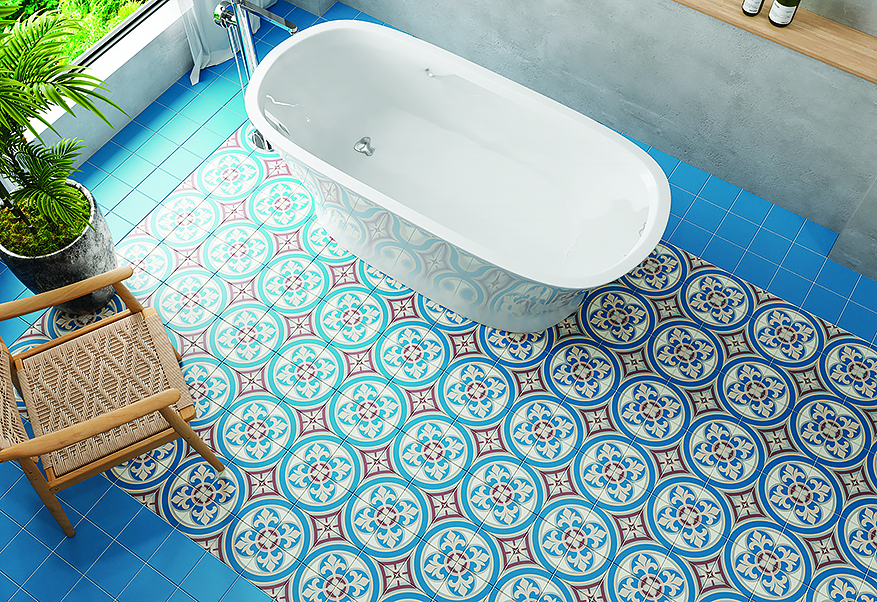
The trend identified as Heritage Play revisits traditional ceramic influences through a contemporary lens. Benavente and Ortiz pointed to the reinterpretation of historic tile patterns, artisanal techniques and decorative motifs through updated formats, color palettes and installation styles. Many collections referenced Mediterranean tile traditions while incorporating modern production capabilities and large-format tiles.
Finally, Opulis represents a more expressive aesthetic direction centered on richness of texture and visual drama. The concept highlights ceramic tile as a focal point in interior design through sculptural surfaces, layered finishes and bold material contrasts.
While the presentation outlined the concepts behind the trends, the same themes appeared repeatedly across manufacturer showrooms and product displays throughout the region, suggesting a strong alignment between design research and product development within the Spanish ceramic sector.
Together, the four themes reflect a broader shift in ceramic design—balancing technological innovation with renewed emphasis on material authenticity, craftsmanship and emotional connection within interior spaces.
STABILITY IN A CHANGING MARKET
Alongside the design presentations, leaders of the Spanish ceramic tile industry provided an update on the sector’s performance and outlook, outlining both the resilience of the industry and the continued importance of exports to its growth.
According to ASCER, the Spanish ceramic tile industry generated €4.83 billion ($5.45 billion) in annual sales revenue in 2025, representing growth of approximately 1% year
over year.
Exports reached €3.48 billion ($3.93 billion), accounting for roughly 72% of total sales, while domestic sales rose 3.1% to €1.35 billion ($1.52 billion).
Production volumes increased 2.7% to approximately 427 million square meters (4.6 billion square feet). Direct employment also rose 1.4%, reaching nearly 16,000 workers across the sector.
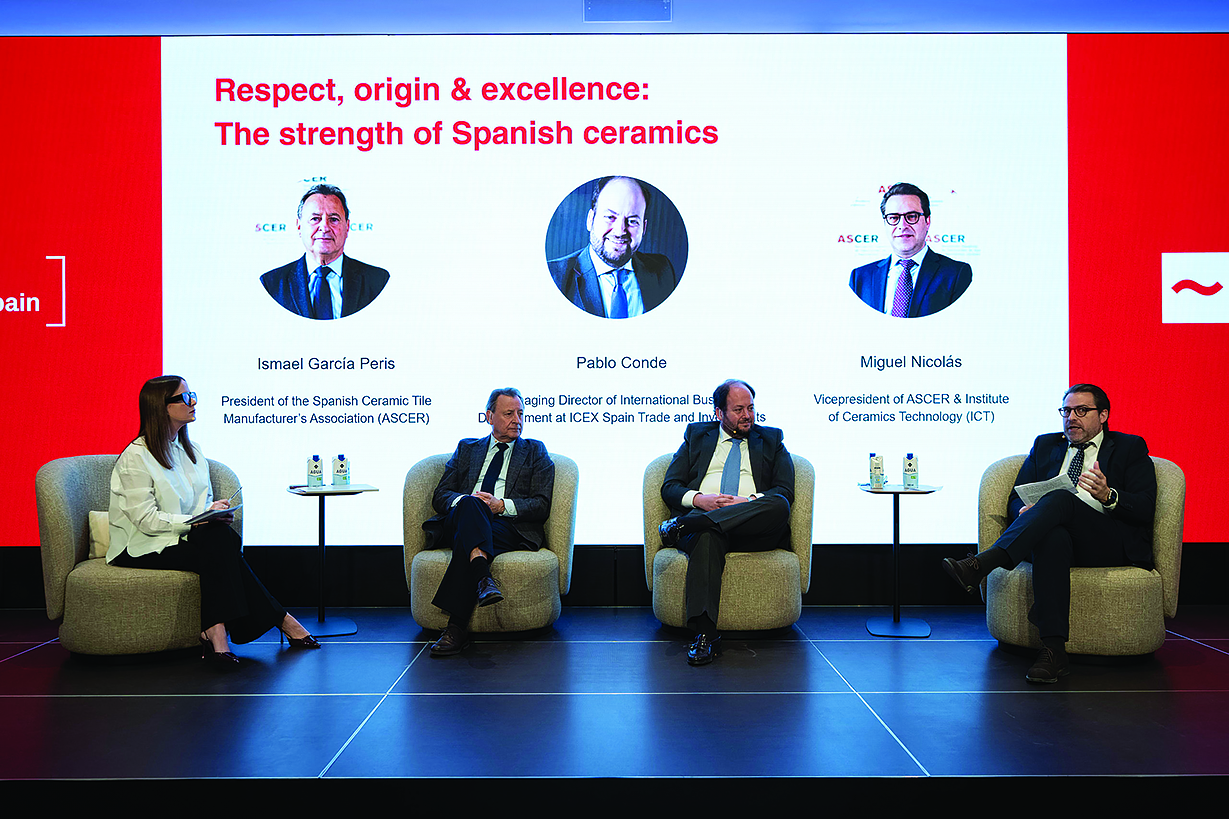
ASCER chairman Ismael García Peris said the results reflect the sector’s ability to adapt to changing market conditions while continuing to invest in innovation and quality.
International markets continue to define the structure of the industry. Spanish tile manufacturers export to 186 countries worldwide, with Europe accounting for 51.1% of exports, followed by North America at 15.9% and Asia at 14.1%.
Additional demand comes from Africa, Central and South America, the Middle East and Oceania, reflecting the sector’s broad global reach.
The United States remains the single largest export country for Spanish tile, with shipments totaling approximately €465 million ($525 million) in 2025. That figure represents a slight decline of about 1% compared with the previous year.
Industry leaders noted that the modest decline in U.S. shipments reflected broader softness across global construction and renovation markets in 2025, as higher interest rates and slower housing activity in several regions weighed on demand for building materials.
France and the United Kingdom follow as the next largest markets, highlighting the continued importance of both European and transatlantic trade relationships for Spanish manufacturers.
Even so, Spain’s ceramic tile industry continues to emphasize value rather than price competition.
Tile companies must prioritize quality, service and innovation as distinguishing features, rather than focusing solely on price, said Pablo Conde, director general for international trade at ICEX. As global competition intensifies, differentiation will remain critical to maintaining Spain’s position in international markets.
A NEW MOMENT ON THE CALENDAR
The creation of Time of Spain also reflects a structural shift in how the industry organizes its global marketing calendar.
Last year, organizers of Feria Valencia announced that Cevisama, Spain’s international ceramic tile exhibition traditionally held each February, would no longer operate as a standalone annual event. Instead, it will be integrated into a broader trade fair format later in the year in Valencia.
For decades, Cevisama served as the primary moment when the international tile market traveled to Spain to see new ceramic innovations. The exhibition traditionally marked the first major European introduction of new collections each year, giving Spanish manufacturers an opportunity to present products months ahead of fall trade events such as Cersaie in Italy.
When the change was announced, manufacturers suddenly faced the loss of their traditional spring launch window.
Exhibition timing plays an important role in shaping product development cycles, distributor travel schedules and specification activity throughout the year. Without a dedicated early-year showcase, the industry began exploring alternative ways to maintain visibility and engagement with international markets.
Rather than relying solely on a traditional trade show format, the sector created its own moment on the calendar.
“Time of Spain is an opportunity to communicate what sets Spanish tiles apart, highlighting not only the products but also their origins, industrial legacy and the people and places behind them,” organizers said.
Conceived as an umbrella initiative, Time of Spain consolidates company-level activities, press programming, product introductions and collective promotions into a coordinated international showcase.
The initiative also reflects a notable level of collaboration among competing manufacturers, who are working together to promote Spanish ceramic tile globally under a shared identity.
LOOKING AHEAD
While Time of Spain debuted this year in response to changes in the global trade show calendar, organizers and manufacturers say the initiative is intended to evolve rather than serve as a one-time event.
By concentrating press visits, product launches and design presentations within a coordinated window each February and March, the Spanish ceramic tile industry hopes to establish a new rhythm for how global audiences discover Spanish ceramic innovation.
Whether the initiative ultimately becomes a permanent fixture on the international design calendar remains to be seen. But the program signals a broader evolution within the Spanish ceramic sector—one that moves beyond reliance on a single trade show and toward more direct engagement with architects, designers, distributors and media around the world.
As global markets continue to shift, Castellón’s manufacturers appear determined to ensure that Spanish tile remains part of the international design conversation.


Join Our Newsletter
Get the latest flooring industry news delivered weekly.